
Best Smart Thermostats UK: 4 Top Picks [2026]
How this guide was made: this is a research-based roundup, not a hands-on lab review. Picks are based on manufacturer specifications, verified UK owner reviews, independent published test results, price history and what UK buyers are actually choosing. More on the method.
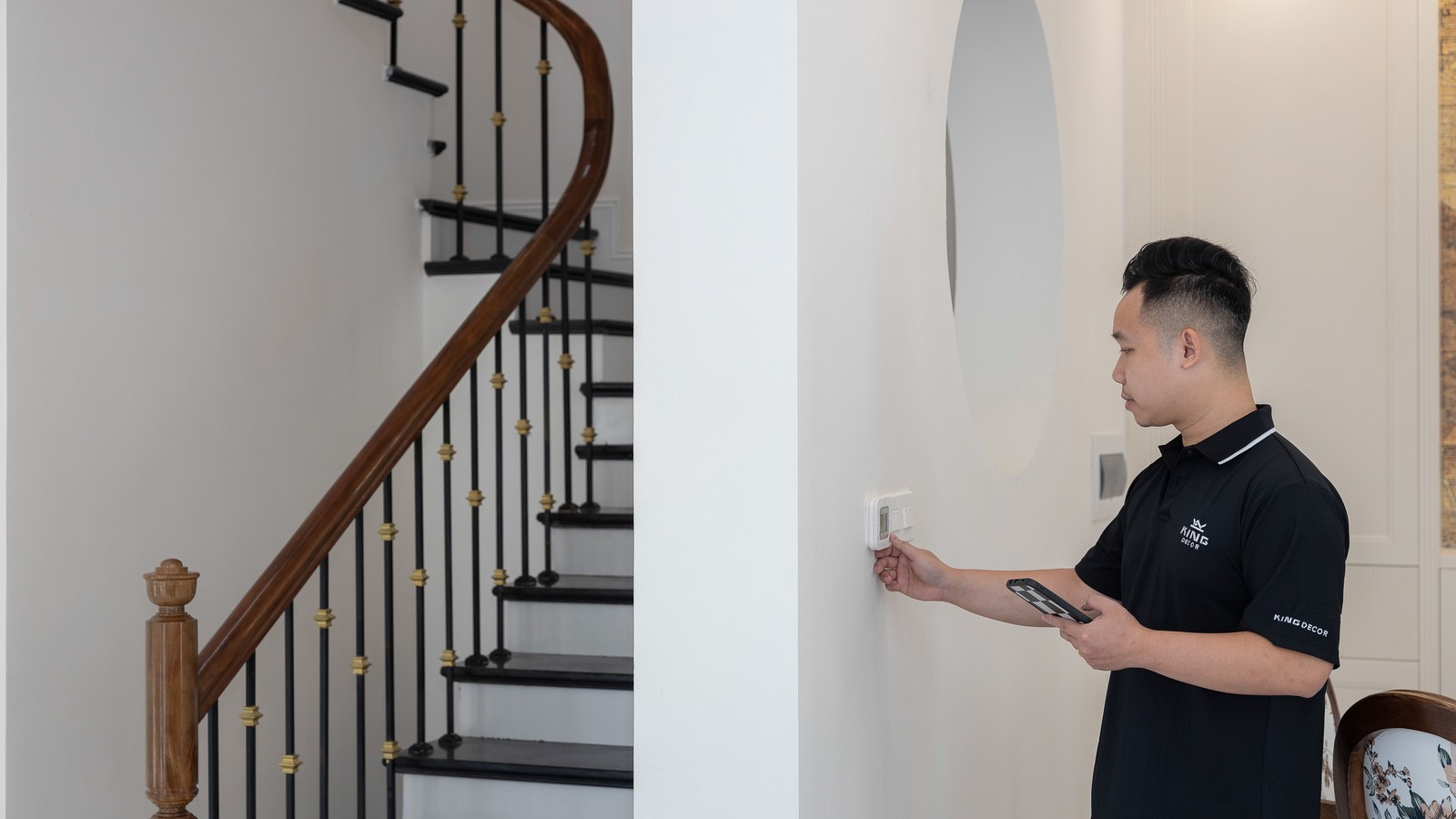
If your heating comes on at 6am for a house that's empty by 8, or you keep turning the dial up and down all evening, the thermostat is the problem, not the boiler. A smart thermostat heats the home around when you're actually in it — but only if you pick one that suits your boiler.
Which smart thermostat is best for a UK home?
For most UK homes, Tado and Hive suit standard combi and system boilers, while Nest suits people who want automatic scheduling with little setup. Choose by boiler type and whether you need room-by-room control with smart radiator valves, rather than by brand alone.
Heating is the single biggest line on a UK energy bill — roughly half of what a typical household spends on gas and electricity combined. So a gadget that decides when the boiler fires is not a novelty; it is the highest-leverage smart home purchase most people can make.
This guide compares four smart thermostats worth buying in the UK in 2026 — tado, Google Nest, Hive and Honeywell — on price, boiler compatibility, installation hassle and how much they realistically save.
At a glance: how the picks compare
Typical UK prices and published specs at the time of writing — always check the live price.
| Product | Best for | Zoning | Works without subscription | Price | Retailer link |
|---|---|---|---|---|---|
| Best overalltado° Smart Thermostat V3+ | Best zoning story and open-window detection in UK homes. | Room-by-room (add TRVs) | Yes (Auto-Assist optional) | around £150 | Check PriceAffiliate · Amazon UK |
| Best automationGoogle Nest Learning Thermostat | Set-and-forget schedules that adapt on their own. | Single zone | Yes | around £200 | Check PriceAffiliate · Amazon UK |
| Easiest to live withHive Active Heating Kit | Straightforward app and the widest UK installer support. | Single zone | Yes | around £130 | Check PriceAffiliate · Amazon UK |
| Best for retrofitsDrayton Wiser Kit 2 | Expandable zoning on older UK boilers and combi systems. | Multi-zone via TRVs | Yes | around £150 | Check PriceAffiliate · Amazon UK |
Best overall
tado° Smart Thermostat V3+
Best zoning story and open-window detection in UK homes.
- Zoning
- Room-by-room (add TRVs)
- Works without subscription
- Yes (Auto-Assist optional)
- Price
- around £150
Check PriceAffiliate · Amazon UKBest automation
Google Nest Learning Thermostat
Set-and-forget schedules that adapt on their own.
- Zoning
- Single zone
- Works without subscription
- Yes
- Price
- around £200
Check PriceAffiliate · Amazon UKEasiest to live with
Hive Active Heating Kit
Straightforward app and the widest UK installer support.
- Zoning
- Single zone
- Works without subscription
- Yes
- Price
- around £130
Check PriceAffiliate · Amazon UKBest for retrofits
Drayton Wiser Kit 2
Expandable zoning on older UK boilers and combi systems.
- Zoning
- Multi-zone via TRVs
- Works without subscription
- Yes
- Price
- around £150
Check PriceAffiliate · Amazon UK
The Short Answer
Best overall: tado Smart Thermostat V3+. The widest UK boiler compatibility, proper room-by-room zoning if you add radiator valves, and no subscription needed for the basics.
Best automation: Google Nest Learning Thermostat. Learns your routine and adjusts itself, and it is the nicest-looking thermostat here by a distance.
Best for simplicity: Hive Thermostat. The easiest app and schedule to live with, and the one most likely to be understood by everyone in the house.
Best value: Honeywell Home T6. Around £120 for solid geofenced scheduling with no ongoing costs — the sensible pick if you just want the saving.
Check Your Boiler Before You Check the Reviews
The most common smart thermostat mistake in the UK is buying on features and discovering the wiring does not suit. Three questions settle it:
Do you have a hot water cylinder? If yes, you need a thermostat that controls hot water as well as heating. tado, Nest and Hive all sell versions that do; make sure you buy that version rather than the combi-only kit.
Is there already a wall thermostat, and is it wired? Replacing a wired thermostat is the easy path. If the only control is a programmer on the boiler, you will need a receiver wired in, which usually means an engineer.
Is the system S-plan or Y-plan? Older fully pumped systems with motorised valves need a compatible receiver setup. tado's compatibility checker is the most thorough of the four and worth ten minutes before you buy anything.
If your heating is communal, or you rent and cannot touch the boiler, skip this guide and read our smart radiator valves guide instead — valves control individual rooms without touching the boiler at all.
The Best Smart Thermostats UK Comparison Table
| Thermostat | Typical UK Price | Hot Water Control | Zoning | Subscription | Where to Buy |
|---|---|---|---|---|---|
| tado Smart Thermostat V3+ | Check current price | Yes (correct kit) | Yes, with tado TRVs | Optional, ~£3/mo | Check PriceAffiliate link · Amazon UK |
| Google Nest Learning Thermostat | Check current price | Yes (3rd gen) | Limited | None | Check PriceAffiliate link · Amazon UK |
| Hive Thermostat | Check current price | Yes (correct kit) | With Hive TRVs | Optional extras | Check PriceAffiliate link · Webgains |
| Honeywell Home T6 | Check current price | Wired version | No | None | Check PriceAffiliate link · Amazon UK |
*Prices vary by retailer and change often — always check the current price. Add an installation fee if an engineer fits it.*
Get Your Free UK Home Energy Audit Checklist
Cut your energy bills with our UK home energy audit checklist, plus our best gadget deals — free.
1. tado Smart Thermostat V3+ — Best Overall
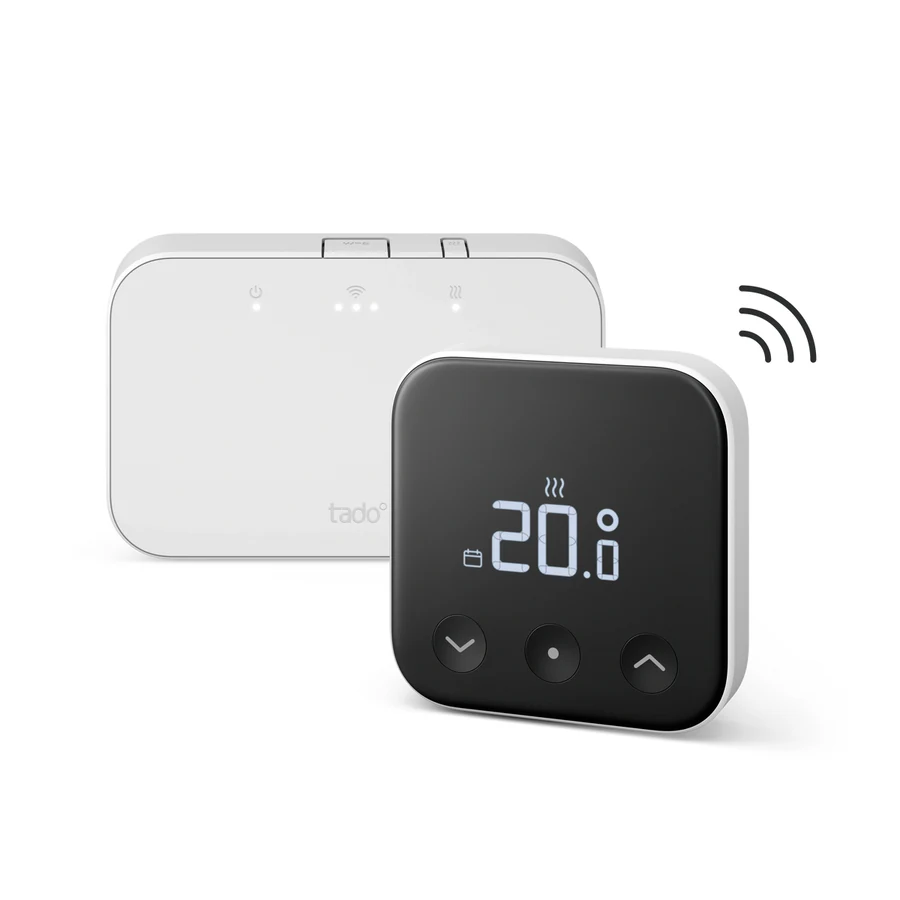
tado wins on the thing that actually matters in British housing stock: it fits. Wireless and wired versions, hot water control, S-plan and Y-plan support, and a compatibility checker that tells you which kit you need before you spend anything.
It is also the only pick here that scales into genuine zoning. Add tado radiator valves room by room and the thermostat stops being a single temperature for the whole house and starts heating the rooms you are in — which is where most of the saving actually comes from.
Open-window detection and geofencing are the two features you will notice weekly: the heating backs off when someone leaves a door open, and it stops warming an empty house when the last phone leaves the postcode.
Watch out for: those two features run manually unless you pay about £3 a month for Auto-Assist. The maths still works — the subscription costs less than a fortnight of heating an empty house — but it should be a conscious choice, not a surprise.
2. Google Nest Learning Thermostat — Best Automation
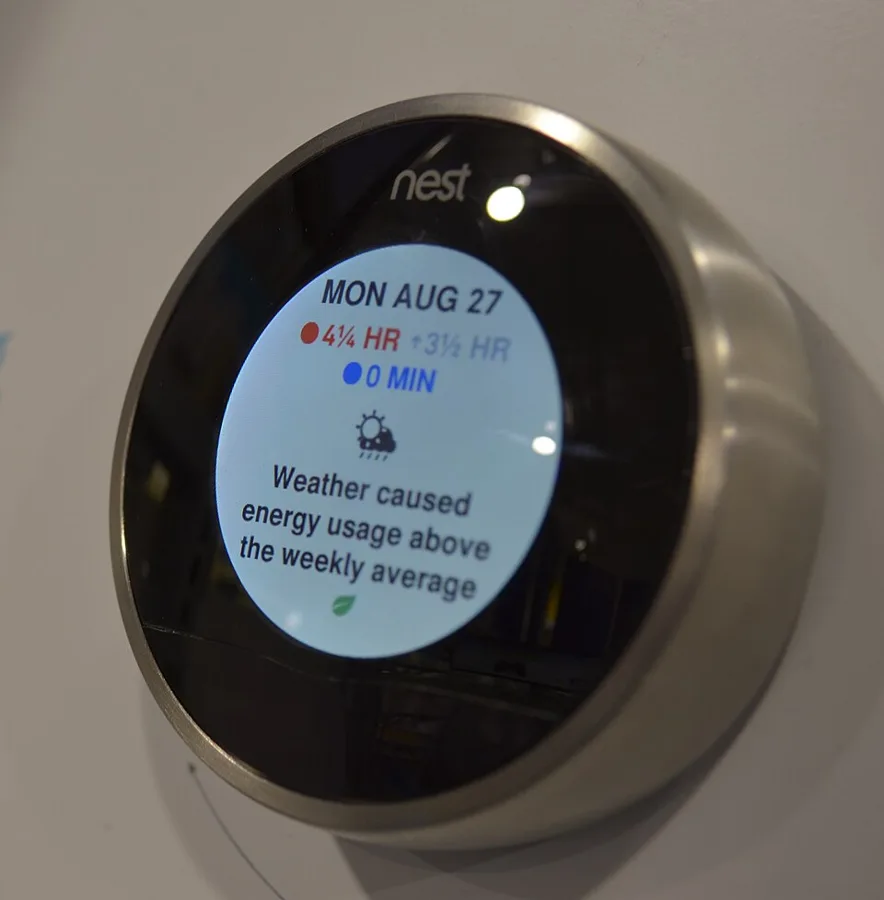
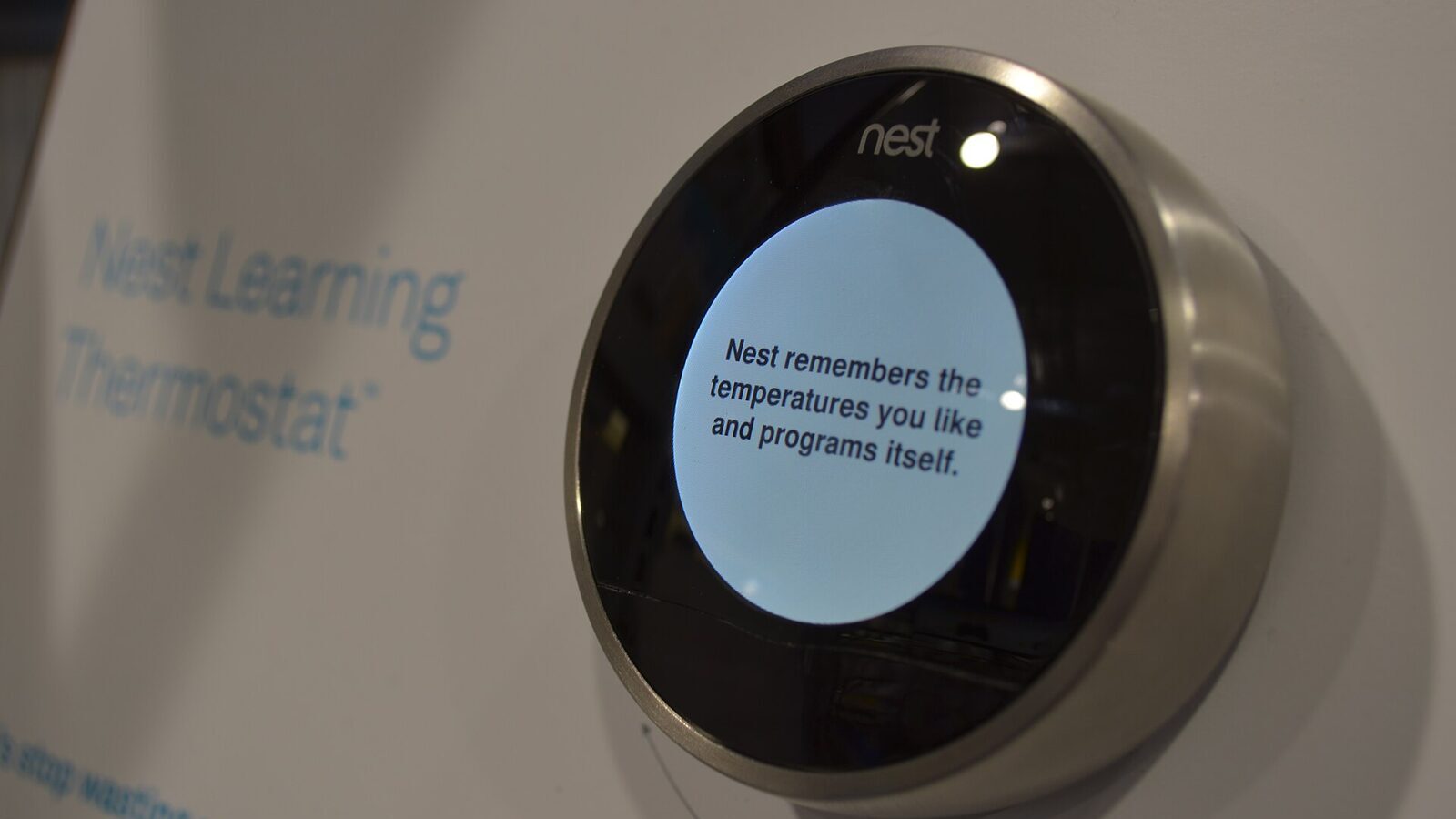
The Nest is the thermostat for people who do not want to build a schedule. Turn it up when you are cold for a week or two and it constructs a routine around your behaviour, then trims the edges — pre-heating earlier on cold mornings, easing off when the house holds warmth.
It is also the best-looking control on this list, which matters more than reviewers admit for something mounted in a hallway. Google Home integration is seamless, and the third-generation model handles hot water cylinders properly.
Watch out for: the learning is a black box. If you like knowing exactly when your heating will come on, you may end up switching to a manual schedule and paying a premium for automation you turned off. Zoning support is also weak compared with tado.
3. Hive Thermostat — Best for Simplicity
Hive's advantage is that everyone in the house can use it. The app is the clearest of the four, the schedule is a straightforward grid rather than a learning algorithm, and the boost button does exactly what a boost button should.
It handles heating and hot water, works with Alexa and Google Assistant, and is widely stocked with frequent discounts — it is often the cheapest way into smart heating with an engineer fit included. Hive radiator valves add basic room control later if you want it.
Watch out for: it is the least clever of the four. No learning, and geofencing is more basic than tado's. If nobody in your house will ever open the app, that simplicity is a feature; if you want to optimise, you will outgrow it.
4. Honeywell Home T6 — Best Value
The T6 is the unglamorous, effective option. It buys a proper programmable smart thermostat with geofencing, seven-day scheduling and app control, from a manufacturer whose heating controls have been on British walls for decades.
There is no subscription, no learning to second-guess and no ecosystem to buy into. If your goal is the heating saving rather than a smart home hobby, this is the shortest route to it.
Watch out for: the app is functional rather than pleasant, and there is no zoning. The wired version is the one to get if you have a hot water cylinder.
How Much Does a Smart Thermostat Actually Save?
The honest range is 8-15% of heating spend for a household that previously ran a fixed schedule or heated on a timer they never adjusted. On a £900-a-year heating bill, that is roughly £70-£135 — payback in one to three winters depending on price and installation.
Three things decide where you land in that range. How badly you heat now: a house that heats an empty living room from 6am saves far more than one already running tight schedules. Whether the house empties during the day: geofencing has nothing to work with if someone is always home. Whether you add zoning: single-thermostat savings are modest, room-level control is where the numbers get interesting.
One caveat worth stating plainly: turning the target temperature down by a degree saves more than any thermostat feature, and it is free. A smart thermostat is about heating for less *time*, not at a lower temperature.
If you want to see the effect rather than trust an estimate, a home energy monitor will show gas and electricity use before and after — the only way to know what your house actually did.
Zoning: Where the Bigger Saving Lives
A single thermostat heats the whole house to suit one room, usually the hallway. That is fine in a small flat and wasteful in a three-bedroom house where the back bedroom is used two hours a day.
Zoning fixes it: smart radiator valves let each room follow its own schedule while the thermostat decides when the boiler fires. In practice that means bedrooms warm at 6.30am and 9pm only, the spare room stays at 15°C, and the living room gets the evening.
This is why tado leads the list — its valves and thermostat are designed as one system. Our smart radiator valves guide covers the valve options in detail, and the smart heating guide explains how the pieces fit together.
Smart Thermostat Questions UK Buyers Actually Ask
Do smart thermostats need Wi-Fi all the time?
No — but you lose most of what you paid for. The thermostat and its boiler receiver talk to each other over their own radio link, so a broadband outage does not leave you cold: the schedule already stored on the device keeps running and the dial on the wall still works. What stops is remote control from the app, geofencing, weather compensation and voice commands, because those depend on the manufacturer's cloud service. If your broadband is genuinely unreliable, favour a model that stores its full schedule locally rather than one that treats the cloud as the brain.
Does a smart thermostat turn the boiler on and off, or just measure temperature?
It does both, and this is the part most product pages gloss over. The wall unit measures room temperature; a separate receiver wired to the boiler is what actually closes the circuit that fires it. In a combi setup the receiver is often a small box beside the boiler; in a system with a cylinder it may sit in the airing cupboard alongside motorised valves. That split matters when you are buying: a thermostat sold without the matching receiver will not control anything unless you already have compatible wiring in place.
How does a smart thermostat control individual radiators?
The thermostat alone does not. It decides when the boiler runs; smart radiator valves decide which rooms get the resulting hot water. The valve replaces the plastic knob on the radiator and opens or closes its own flow to hold a target temperature for that room, then tells the thermostat it needs heat. Without valves, a smart thermostat heats the whole house to satisfy one room — usually the hallway, which is the coldest and least-used space in a British house, which is exactly why hallway-sited thermostats overheat everything else.
How does a smart thermostat measure room temperature accurately?
By sensor placement far more than sensor quality. Every model here reads within a degree or so, but a unit mounted above a radiator, in direct sun, next to a draughty front door or on an external wall will report a temperature the rest of the room never experiences. The conventional siting guidance — an internal wall, roughly 1.5m up, away from heat sources and draughts — matters more than which brand you buy. Models that accept remote room sensors sidestep the problem by averaging several rooms instead.
How do smart thermostats use weather data?
Two different ways, and they are worth telling apart. Weather compensation adjusts the boiler's flow temperature against the outside temperature, so the system runs cooler and more efficiently on mild days — a genuine efficiency gain, but it needs a boiler that supports modulated flow control. Weather-aware pre-heating simply starts the heating earlier on cold mornings so the house reaches target on time. Most UK smart thermostats do the second; fewer do the first, and the marketing rarely distinguishes them.
How does a learning thermostat work out your schedule?
It watches manual adjustments for a week or two and builds a schedule from the pattern. That works well in a household with a regular routine and poorly in one without — shift work, children at home on irregular days or a working-from-home pattern that changes weekly all produce a schedule that is confidently wrong. Every learning model lets you switch to a fixed schedule instead, and for many households that is the better setting regardless of what the box promises.
Do I actually need a smart thermostat?
Three situations where the answer is usually yes: you currently heat to a fixed schedule that does not match when the house is occupied; nobody adjusts the existing controls because they are awkward; or you have rooms that are consistently too hot or too cold. Three where it is usually no: you already run a tight schedule and adjust it as the seasons change; your heating is communal and you cannot control the boiler; or the house is poorly insulated, in which case draught-proofing returns more per pound than any control upgrade.
The Verdict
Buying GuideFor most UK homes, the tado Smart Thermostat V3+ is the smart thermostat to buy — it fits the widest range of British boilers, and it is the only one here that grows into proper room-by-room zoning.
Choose the Nest Learning Thermostat if you want the heating to sort itself out and never touch an app, the Hive Thermostat if the whole household needs to understand it, and the Honeywell Home T6 if you want the saving for the lowest possible outlay.
Whichever you fit, spend the first fortnight on the schedule rather than the gadget. The thermostat only saves money if it is allowed to stop heating an empty house — and that is a setting, not a feature.
*Prices vary by retailer and change often — always check the current price before buying. This article contains affiliate links — see our disclosure. Saving figures are illustrative estimates based on published independent research and typical UK usage, not guarantees. Heating and hot water wiring work should be carried out by a qualified engineer.*
Frequently Asked Questions
Keep reading
Best Smart Radiator Valves UK [2026]
Room-by-room zoning without replacing your boiler controls.
Read the guideBest Smart Light Bulbs UK: 4 Top Picks [2026]
Running costs in pence per year, brightness compared and the UK picks worth buying.
Read the guideBest Home Energy Monitors UK [2026]
See which circuits actually cost you money before you buy anything.
Read the guide