
Do Energy-Efficient Appliances Save Money? UK Guide [2026]
How this guide was made: this is a research-based roundup, not a hands-on lab review. Picks are based on manufacturer specifications, verified UK owner reviews, independent published test results, price history and what UK buyers are actually choosing. More on the method.
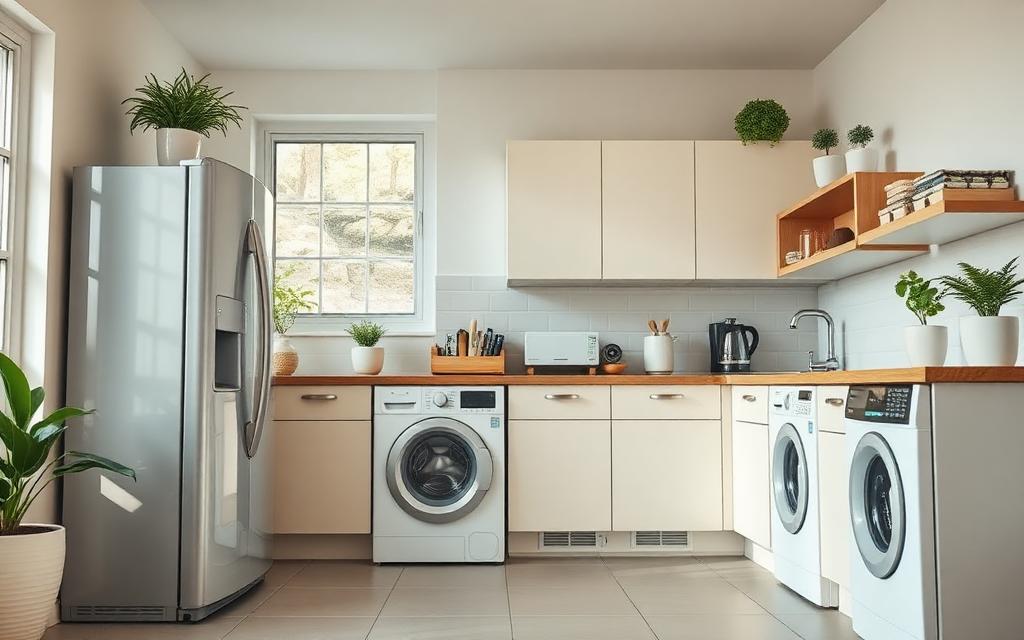
Do energy-efficient appliances really save money?
They can, especially for appliances that run constantly or heat water, such as fridges, freezers, washing machines and tumble dryers. Compare the kWh per year figure on the UK energy label rather than the letter grade alone, and replace appliances when they fail rather than early.
Energy-efficient appliances usually cost more upfront, but can lower running costs over their lifetime. With UK electricity prices at record highs, the potential savings from efficient appliances have rarely been more relevant. This comprehensive guide explains how energy ratings work, which upgrades tend to offer the best returns, and when it makes financial sense to invest.
Understanding Energy Ratings

In the UK, appliances are rated from A (most efficient) to G (least efficient). The EU energy label was updated in 2021 to provide clearer, more accurate ratings – if you remember A+++ ratings, those roughly equal today's C-D ratings.
What the ratings mean:
| Rating | Efficiency Level | Running Costs | Typical Savings vs G-rated |
|---|---|---|---|
| A | Best-in-class | Lowest | 50-70% |
| B-C | Excellent | Low | 30-50% |
| D-E | Good/Average | Moderate | 15-30% |
| F-G | Poor | High | Baseline |
The difference between ratings can mean hundreds of pounds over the appliance's lifetime. Always check the energy label before purchasing – it's legally required on most large appliances.
Major Energy Users in Your Home
Understanding where your energy goes helps prioritise upgrades. These appliances consume the most energy in typical UK homes:
| Appliance Category | % of Electricity Use | Priority |
|---|---|---|
| Heating systems (electric) | 40-50% | High |
| Hot water heating | 15-20% | High |
| Refrigeration | 10-15% (runs 24/7) | High |
| Washing/drying | 10-12% | Medium |
| Cooking | 5-10% | Medium |
| Lighting | 5% | Medium |
| Electronics | 5% | Low |
Focus your upgrade budget on the categories that consume the most energy in your specific situation.
Refrigerators and Freezers
Running 24 hours a day, 365 days a year, these are prime upgrade candidates. The efficiency difference between old and new models is dramatic.
Cost comparison:
| Model Age | Typical kWh/Year | Annual Cost (30p/kWh) |
|---|---|---|
| New A-rated | 150 kWh | £45 |
| 5-year-old (B-rated) | 250 kWh | £75 |
| 10-year-old | 400+ kWh | Varies |
| 15-year-old | 500+ kWh | Varies |
Potential annual savings: savings depend on your home, tariff and usage when replacing a 10+ year old model.
Tips for maximising efficiency:
• Don't overfill (blocks air circulation) but don't run empty (thermal mass helps)
• Keep condenser coils clean and dust-free
• Ensure door seals are intact (the paper test: close the door on a piece of paper – if it slides out easily, seals need replacing)
• Set optimal temperatures: fridge 3-4°C, freezer -18°C
• Position away from heat sources (ovens, direct sunlight)
Get Your Free UK Home Energy Audit Checklist
Cut your energy bills with our UK home energy audit checklist, plus our best gadget deals — free.
Washing Machines
Modern efficient washers use less water and energy while delivering excellent cleaning performance. The key advances are in water efficiency and intelligent load sensing.
Energy-saving features to prioritise:
• Cold wash programmes – Clean effectively at 20-30°C using 90% less energy than hot washes
• High spin speeds – Remove more water, dramatically reducing dryer time and energy
• Load sensors – Adjust water and energy based on actual load size
• Quick wash cycles – For lightly soiled items, reducing water and energy use
Potential savings: Savings depend on your home, tariff and usage compared to older models, plus significant water bill reduction.
Tumble Dryers
Dryers are notorious energy consumers, but heat pump technology has revolutionised efficiency. If you use a dryer regularly, this upgrade offers exceptional returns.
Dryer technology comparison:
| Type | How It Works | kWh/Year | Annual Cost |
|---|---|---|---|
| Vented | Heats air, vents outside | 500+ kWh | Varies |
| Condenser | Heats air, condenses moisture | 450 kWh | £135 |
| Heat pump | Recycles heat efficiently | 200 kWh | £60 |
Heat pump dryers cost more upfront (£400-800 vs £200-400 for vented) but offer potential savings. The exact amount saved annually depends on your home, tariff and usage. If you use a dryer 2-3 times weekly, this upgrade could pay for itself over time, depending on individual circumstances.
Dishwashers
Contrary to popular belief, efficient dishwashers use less water and energy than hand washing – when fully loaded and used correctly.
Efficiency tips for maximum savings:
• Always run full loads (half loads waste water and energy)
• Use eco programmes (lower temperature, longer wash cycle)
• Skip the pre-rinse (modern detergents work without it)
• Let dishes air dry instead of using heated drying
• Clean filters monthly for optimal performance
Potential savings: Savings depend on your home, tariff and usage.
Boilers and Heating Systems
Heating accounts for over half of energy use in most UK homes, making this the biggest opportunity for savings. If you have a gas boiler, its efficiency determines a huge portion of your annual energy costs.
When to upgrade your boiler:
• Boiler is over 15 years old
• Efficiency rating is below 86% (check the manufacturer's data)
• Frequent breakdowns or expensive repairs
• Rising heating bills despite similar usage
Potential savings from a modern condensing boiler: Significant reduction in gas bills, though actual savings depend on your home, tariff and usage.
Additional heating efficiency measures:
| Improvement | Cost | Annual Savings |
|---|---|---|
| Smart thermostat | Check current price | £150-200 |
| Thermostatic radiator valves | Check current price | £50-100 |
| Improved insulation | Check current price | £100-200 |
| Boiler upgrade | Check current price | £200-400 |
Calculating Your Savings
Before purchasing, calculate potential savings to ensure the upgrade is worthwhile:
Step-by-step calculation:
1. Find the kWh/year on the energy label of the new appliance
2. Multiply by electricity rate (~30p/kWh as of 2026)
3. Estimate your current appliance (check bills, manufacturer data, or assume older models use 2-3x more)
4. Calculate annual savings = Old cost - New cost
5. Calculate payback period = Price difference ÷ Annual savings
Example calculation:
• New A-rated fridge: 150 kWh/year × £0.30 = savings depend on your home, tariff and usage
• Old 10-year fridge: 400 kWh/year at current tariff rates. Savings depend on your home, tariff and usage. Check your own usage.
• Annual savings: £75
• If new fridge costs £150 more than basic model: Payback in 2 years
• Remaining 10+ years of fridge life: Savings depend on your home, tariff and usage
When to Upgrade
Don't replace working appliances just for efficiency. The environmental impact of manufacturing new appliances (embodied carbon) often exceeds efficiency gains from premature replacement. The best time to upgrade is when appliances need replacement anyway.
Consider replacing when:
• Appliance is at end of life (10-15 years for most)
• Repairs would cost more than 50% of replacement price
• Energy costs are exceptionally high for that appliance
• New features would significantly improve quality of life
• You're renovating and will replace anyway
Don't rush to replace if:
• Appliance is under 10 years old and working well
• Payback period exceeds 5 years
• You may move house soon
Government Schemes
Check for available schemes that can reduce upgrade costs:
Boiler Upgrade Scheme
• Up to £7,500 grant for air source heat pumps
• Up to £6,000 for ground source heat pumps
• Available to homeowners in England and Wales
ECO4 Scheme
• Free or subsidised insulation and heating improvements
• Available to qualifying low-income households
• Contact your energy supplier to check eligibility
Smart Export Guarantee (SEG)
• Get paid for solar electricity you export to the grid
• Available to anyone with solar panels
• Rates vary by supplier – shop around
The Bottom Line
Energy-efficient appliances are investments that pay dividends for years. Prioritise upgrades based on:
1. Biggest energy users first – Heating, hot water, refrigeration offer the largest savings
2. Age and condition – Replace the oldest, least efficient appliances when they fail
3. Payback period – Target upgrades with 2-5 year payback
4. Available incentives – Check for government schemes before purchasing
The combined potential savings from efficient appliances can be significant, depending on your home, tariff and usage. Over a typical 10-15 year appliance lifespan, this can amount to substantial savings – far exceeding any upfront cost difference.
Frequently Asked Questions
Keep reading
Best Home Energy Monitors UK [2026]
See which circuits actually cost you money before you buy anything.
Read the guideBest Smart Light Bulbs UK: 4 Top Picks [2026]
Running costs in pence per year, brightness compared and the UK picks worth buying.
Read the guideBest Smart Plugs UK [2026]
Metering plugs that expose standby drain and real running costs.
Read the guide