
What Is a Smart Thermostat? UK Beginner's Guide [2026]
How this guide was made: this is a research-based roundup, not a hands-on lab review. Picks are based on manufacturer specifications, verified UK owner reviews, independent published test results, price history and what UK buyers are actually choosing. More on the method.
![Illustrative photo for the guide “What Is a Smart Thermostat? UK Beginner's Guide [2026]”](/images/blog-what-is-a-smart-thermostat-uk.jpg)
What is a smart thermostat?
A smart thermostat replaces your heating controller so you can schedule, adjust and monitor your boiler from a phone app. Some learn your routine or switch heating off when everyone leaves. It works with most UK combi and system boilers, but check compatibility before buying.
If you've heard the term 'smart thermostat' a hundred times and still aren't quite sure what one actually does, this is the guide for you. No jargon, no sales pitch — just what it is, how it works with a UK boiler, what it costs, and whether it's worth the money for your home.
I've run smart heating in my own house for years, and the honest summary is this: a smart thermostat won't transform a well-managed home, but it will quietly fix the two most expensive British heating habits — heating an empty house, and heating the whole house when you're only using one room.
The Short Answer
A smart thermostat is a heating controller that connects to your Wi-Fi so you can control your boiler from your phone, on a schedule, or automatically based on whether anyone's home.
Expect to pay a price that varies by retailer for the thermostat itself, plus installation if you don't fancy the wiring.
Typical savings depend on your home, tariff and usage.
Best starting points in the UK: Hive for simplicity, Nest for learning automation, Tado for room-by-room zoning. Our Hive vs Tado comparison goes deeper on the two most popular.
What a Smart Thermostat Actually Is
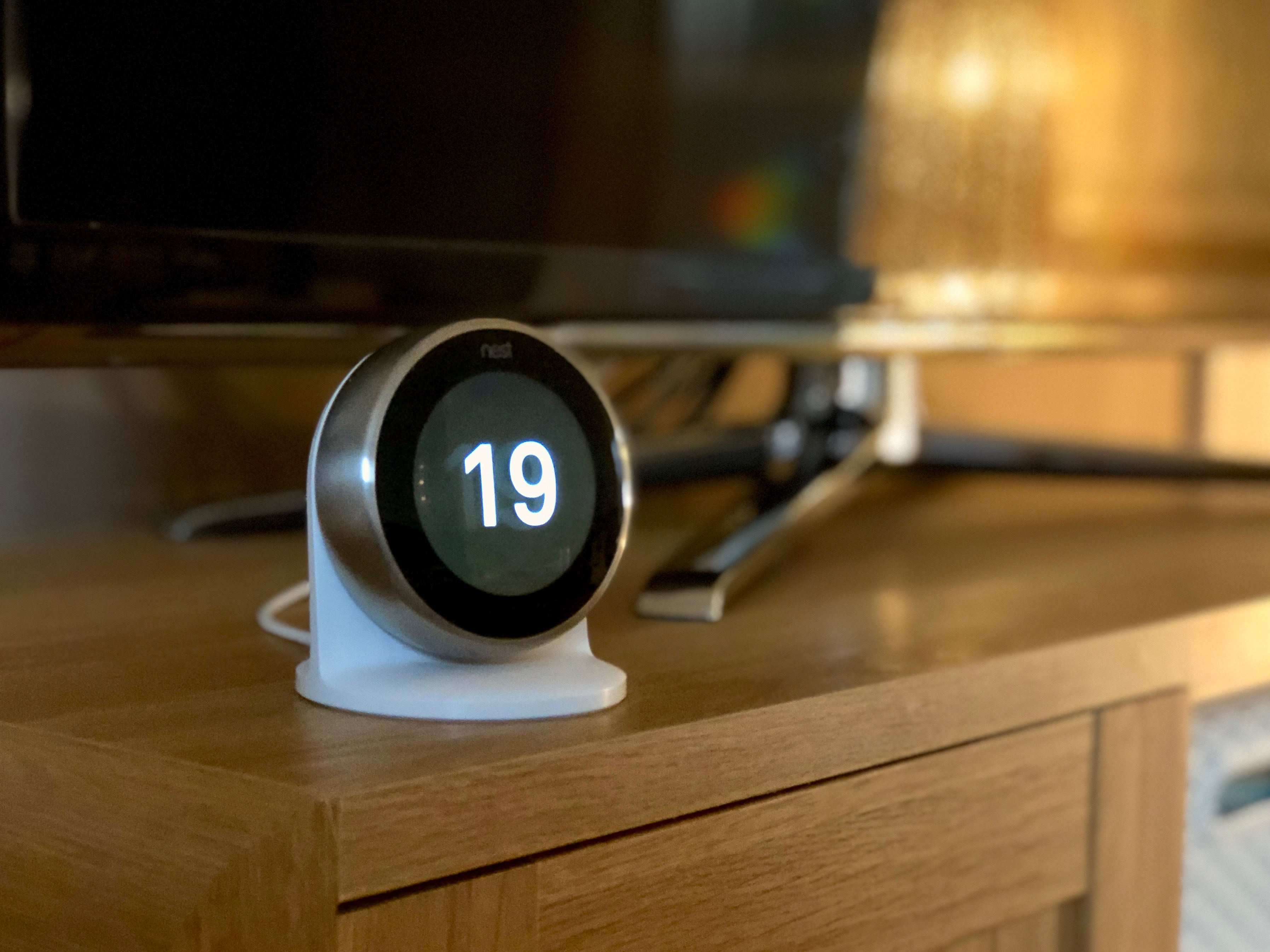
Strip away the marketing and a smart thermostat is still a thermostat: a device that tells your boiler when to fire and when to stop, based on the temperature you want. What makes it 'smart' is the internet connection and the software on top.
That connection unlocks three things a dumb thermostat can't do. First, remote control — adjust the heating from your phone whether you're on the sofa or on holiday. Second, automation — the thermostat can react to your phone's location, the weather forecast, or a learned routine without you touching anything. Third, visibility — apps from Hive, Nest and Tado show you how long your heating actually runs each day, which is the first step to running it less.
It's worth separating the thermostat from the wider category of 'smart heating'. The thermostat is the brain. Add-ons like smart radiator valves extend the system to control rooms individually — but the thermostat is where every setup starts.
How a Smart Thermostat Works with a UK Boiler
This is the bit that confuses people, and it's simpler than it looks. Your existing wall thermostat is basically a switch: when the room is colder than the set temperature, it closes a circuit and the boiler fires. A smart thermostat does exactly the same job — it just gives you more ways to decide what 'colder than' should mean.
Most UK installations have two parts. The thermostat sits in your hall or living room (or is wireless and portable). A receiver wires into the boiler and takes instructions from the thermostat. Some models combine these; some, like Hive and Nest, use a separate hub that plugs into your router.
One UK-specific term worth knowing is OpenTherm. It's a language some boilers and thermostats use to modulate the boiler's output rather than just switching it on and off, which can improve efficiency by a few extra percent. Many modern combis support it, and Nest and Tado can use it — check your boiler manual if you want the bonus.
Get Your Free UK Home Energy Audit Checklist
Cut your energy bills with our UK home energy audit checklist, plus our best gadget deals — free.
The Features That Save You Money
Schedules that actually get used. Every thermostat since the 1980s has had a timer; almost nobody programmes them because the interfaces are dreadful. Apps make scheduling a two-minute job, and easy schedules are the ones people actually set.
Geofencing. The thermostat watches your phone's location and turns the heating down when the last person leaves, back up when someone's heading home. For households with unpredictable routines, this alone is usually worth the purchase price.
Learning and presence detection. Nest famously learns your routine by watching when you adjust it. Others use motion sensors to spot an empty house. Different mechanics, same result: less heating of empty rooms.
Room zoning. Pair the thermostat with smart radiator valves and each room runs its own schedule — heat the office during work hours, the bedrooms in the evening, and stop paying for the rest. This is where the bigger savings live in larger houses.
Weather compensation and open-window detection. Several models check the forecast and ease off on mild days, or spot the sudden temperature drop of an open window and pause the radiator instead of fighting the draught.
What a Smart Thermostat Can't Do
Let's be honest about the limits, because the adverts aren't.
It can't fix a cold house. If your home leaks heat, the thermostat will just help you waste money more efficiently. Insulation and draught-proofing still come first — the Energy Saving Trust is blunt on this point and they're right.
It can't save much if you're already disciplined. If you already turn the heating off when you go out and keep it low overnight, your savings will be at the modest end of the range.
It can't control rooms individually on its own. One thermostat means one temperature decision for the whole house. Individual room control needs smart TRVs as well — see our radiator valves guide for how that works.
And it won't slash your bill by itself if your tariff is wrong. An hour spent comparing energy deals often saves more than any gadget.
The Main Options in the UK
Hive is the UK's best-selling system, backed by British Gas. The app is the friendliest of the lot, installation support is easy to find, and the ecosystem (plugs, lights, valves) is broad. The safe, simple choice.
Google Nest is the design pick — a beautiful dial, proper learning behaviour, and OpenTherm support. The Google Home app is less loved than Hive's, but the hardware is excellent.
Tado is the zoning specialist. Its app and geofencing are best-in-class, and its smart radiator valves integrate seamlessly for room-by-room control. Some automation features sit behind an optional subscription on newer models.
Drayton Wiser is the value British option — often the cheapest full system when you add radiator valves, with a solid app and local control that keeps working if your internet drops.
If you're torn between the two favourites, our head-to-head Hive vs Tado: Which Smart Thermostat Saves More? compares them on real UK running costs.
Is a Smart Thermostat Worth It for You?
Run through these honestly:
Your heating runs when nobody's home — geofencing alone will likely pay for the thermostat within a couple of winters.
Your routine changes day to day — shift workers and hybrid workers get far more from automation than nine-to-fivers with fixed schedules.
You have a modern combi boiler — installation is straightforward and compatibility is near-guaranteed.
You heat rooms you don't use — start planning a zoned system with radiator valves rather than just the thermostat.
You're a renter — wireless models can move with you, but get the landlord's OK before touching any wiring.
If you nodded at the first two, it's worth it. If your home is already tightly managed, put the money toward a home energy monitor instead and find where the rest of your bill is going.
The Verdict
GuideA smart thermostat is one of the few smart home gadgets that earns its keep in a typical UK home — savings depend on your home, tariff and usage, more if you're starting from 'heating on all day'. For simplicity, buy Hive; for learning automation, Nest; for room-by-room control, Tado with its radiator valves.
Start with the thermostat, live with it for a winter, then add radiator valves to the rooms that run on their own schedule. And whatever you buy, claim any installation cashback — British Gas, Octopus and other suppliers periodically run offers on smart heating installs.
*Prices vary by retailer and change often — always check the current price before buying. This article contains affiliate links — see our disclosure. Savings figures are illustrative estimates based on Energy Saving Trust guidance and manufacturer data, not guarantees.*
Frequently Asked Questions
Keep reading
Best Smart Thermostats UK [2026]
The biggest single saving in most UK homes — compared on real running costs.
Read the guideBest Smart Radiator Valves UK [2026]
Room-by-room zoning without replacing your boiler controls.
Read the guideBest Smart Light Bulbs UK: 4 Top Picks [2026]
Running costs in pence per year, brightness compared and the UK picks worth buying.
Read the guide